
News-Details
MZUMBE UNIVERSITY AND CDC AFFIRMS SUSTAINABILITY IN MAJOR PUBLIC HEALTH PROJECT
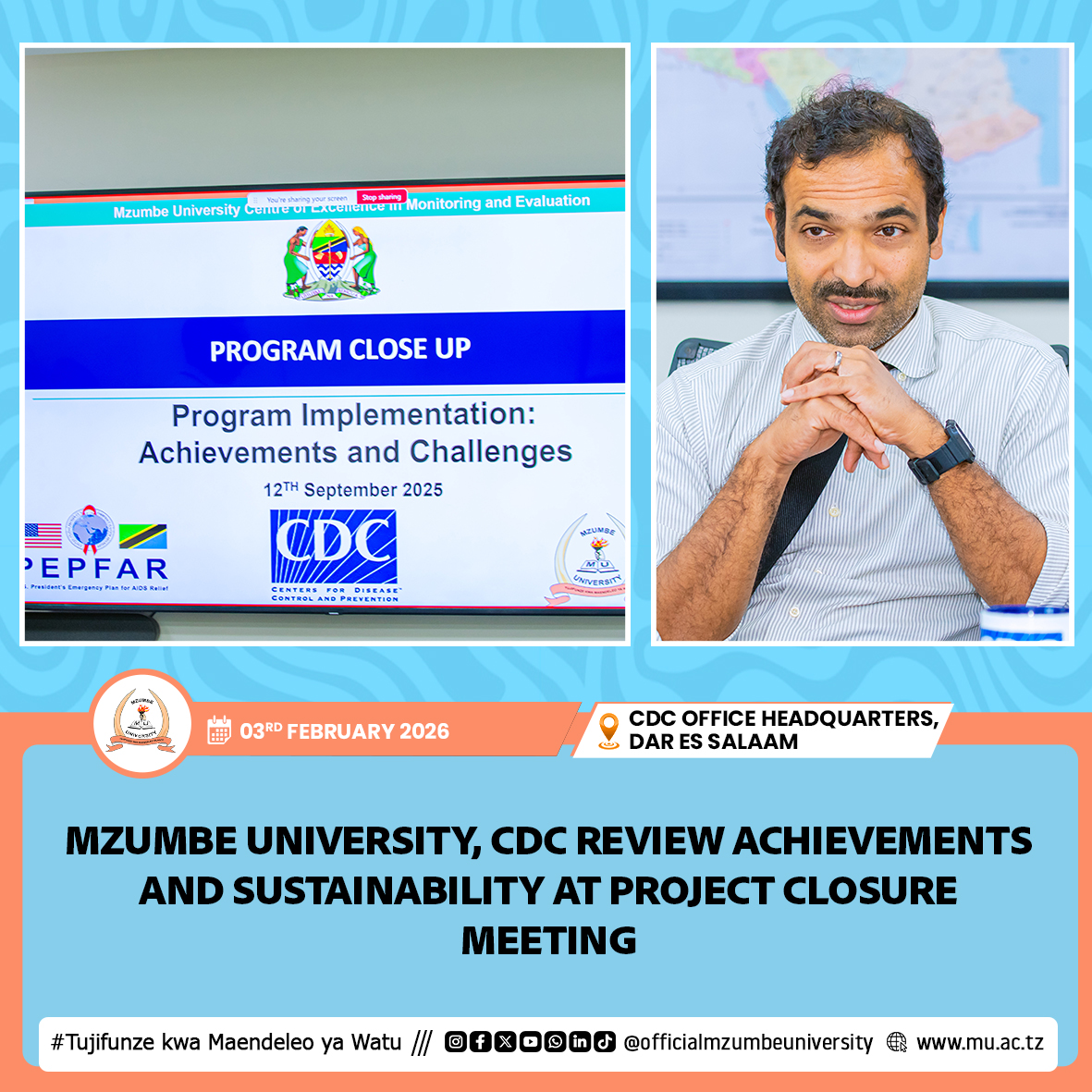
Mzumbe University convened a high-level meeting with the United States Centers for Disease Control and Prevention (CDC) to formally describe a major five-year public health project, reaffirm shared commitment to sustain and expand achievements in strengthening Tanzania’s health workforce and disease surveillance systems. The meeting was held on 03rd February 2026 at the CDC offices in Dar es Salaam, served as an end-of-project review focusing on achievements and sustainability. The meeting provided a platform to validate project outcomes, approve key documents, and agree on mechanisms for project sustainability activities under institutional and government intervention after the project’s completion. The Vice Chancellor of Mzumbe University, Prof. William Mwegoha, explained the project as a historic milestone that strengthened the University’s position as a national leader in monitoring and evaluation, epidemiology training, and digital health capacity building. He expressed appreciation to the United States Government and the CDC for their professional leadership, emphasizing that the partnership delivered long-term, system-wide results rather than short-term gains. “Through the collaboration, systems have been transformed into nationally owned capacity, ensuring that they will continue to function and serve Tanzania long after the project’s conclusion,” Emphasized Prof. Mwegoha. Presenting the project’s achievements, Prof. Henry Mollel highlighted significant progress in the Field Epidemiology and Laboratory Training Programs (FELTP), which enabled the rapid investigation and control of more than 18 disease outbreaks between 2020 and 2025, including cholera, measles, Marburg virus disease, and climate-related emergencies. These efforts substantially strengthened the nation’s capacity for disease surveillance, preparedness, and response. The meeting emphasized that sustainability has been integrated from the beginning of the project, with activities aligned to government systems, digital platforms, and coordination structures. A large portion of the project components has already been transitioned to government ownership, ensuring continuity, scalability and long-term national impact. Project closure does not mark the end of partnership rather a transition, with systems embedded within national frameworks to ensure continuity and sustainability. By addressing implementation challenges and securing government stewardship, the project’s achievements have been safeguarded, guaranteeing a lasting contribution to Tanzania’s public health security. Several senior University leaders attended the meeting, including the Deputy Vice Chancellor – Academic, Research and Consultancy, Prof. Hawa Tundui; Assistant to the Vice Chancellor, Dr. Aloyce Gervas; Principal Investigator, Prof. Henry Mollel; and Senior Team Leader, Prof. Mackfallen Anasel. Their presence underscored the strategic importance of the engagement to the University.


