News-Details
MZUMBE UNIVERSITY’S MANAGEMENT COMMITTEE PROPAGATES QUALITY ASSURANCE EXCELLENCE

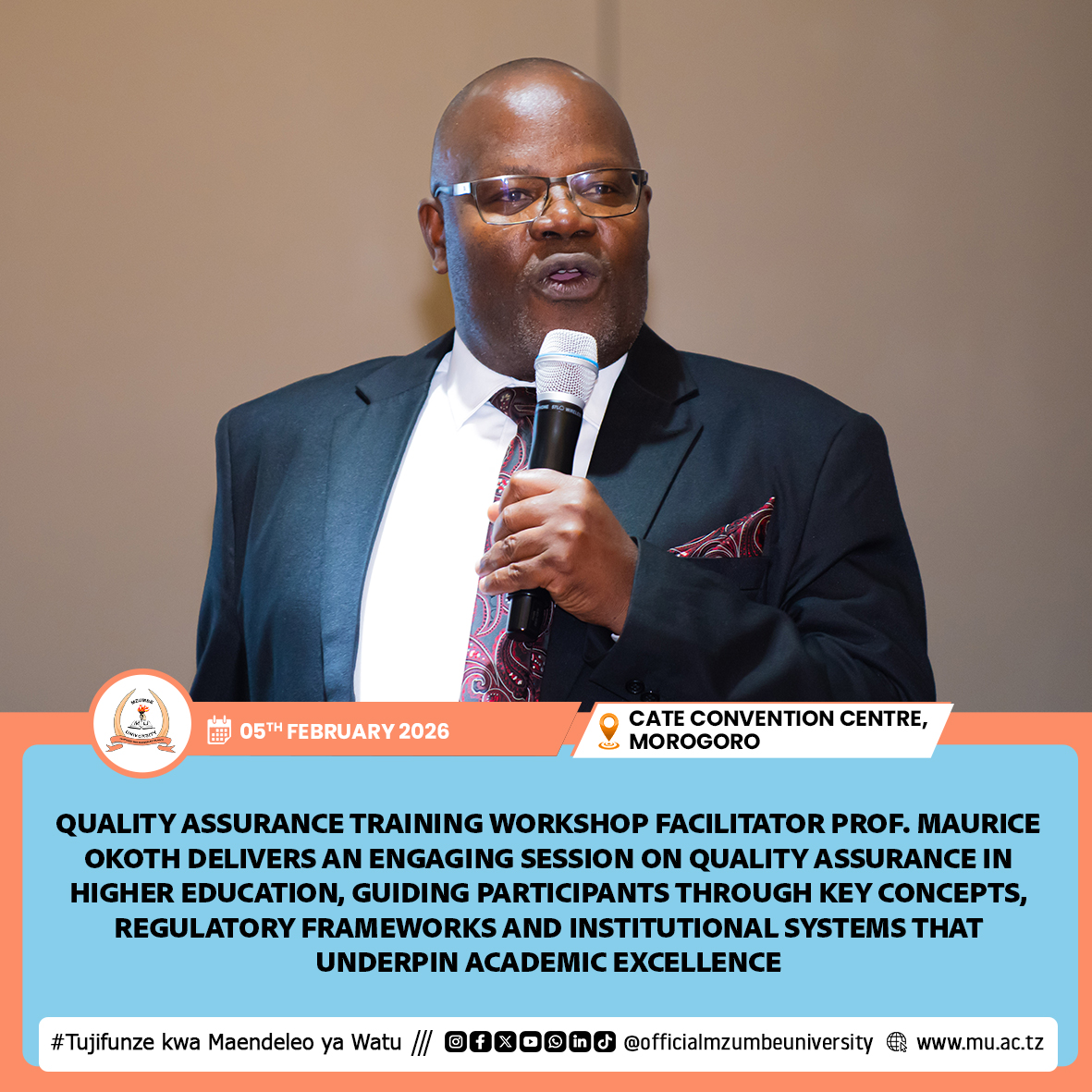
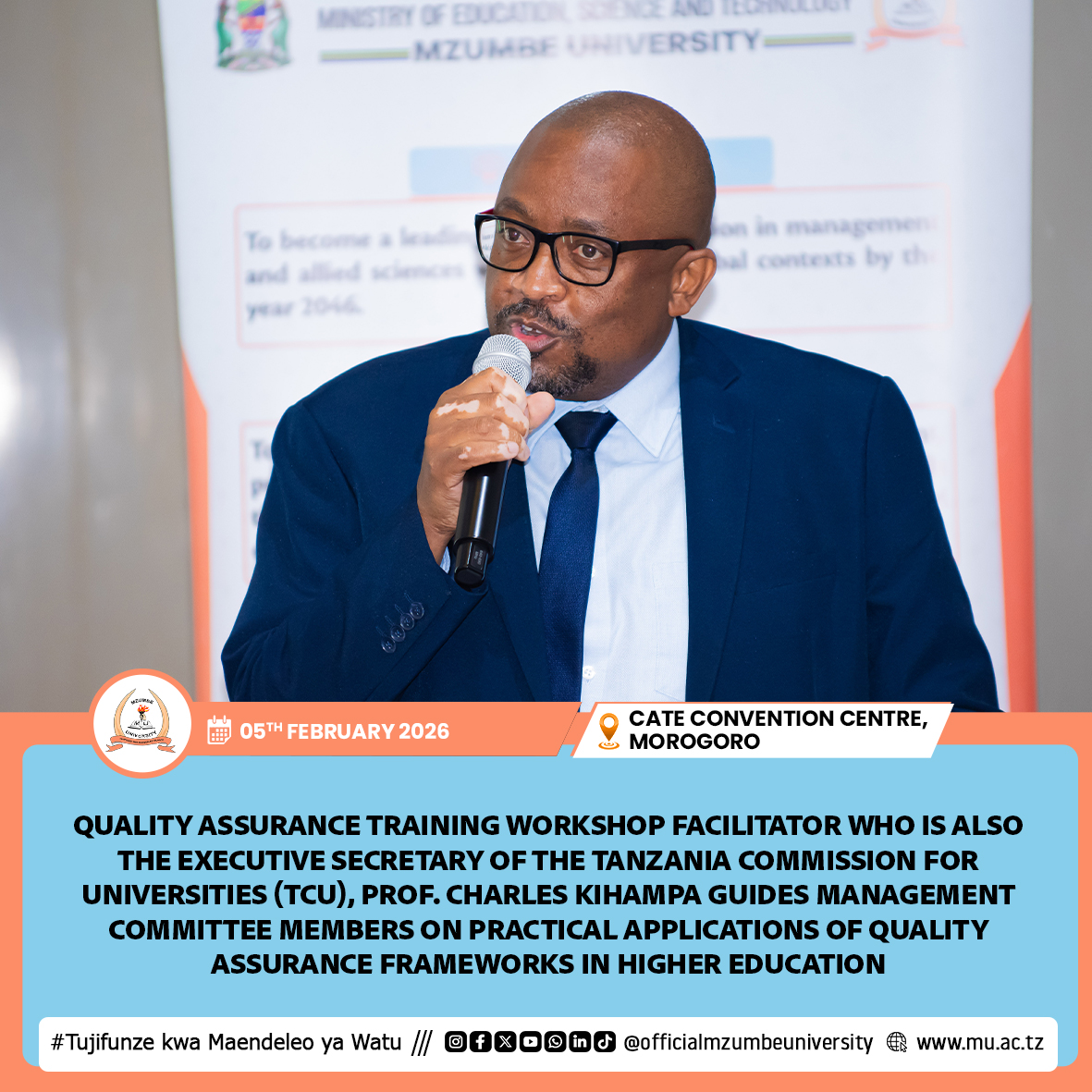
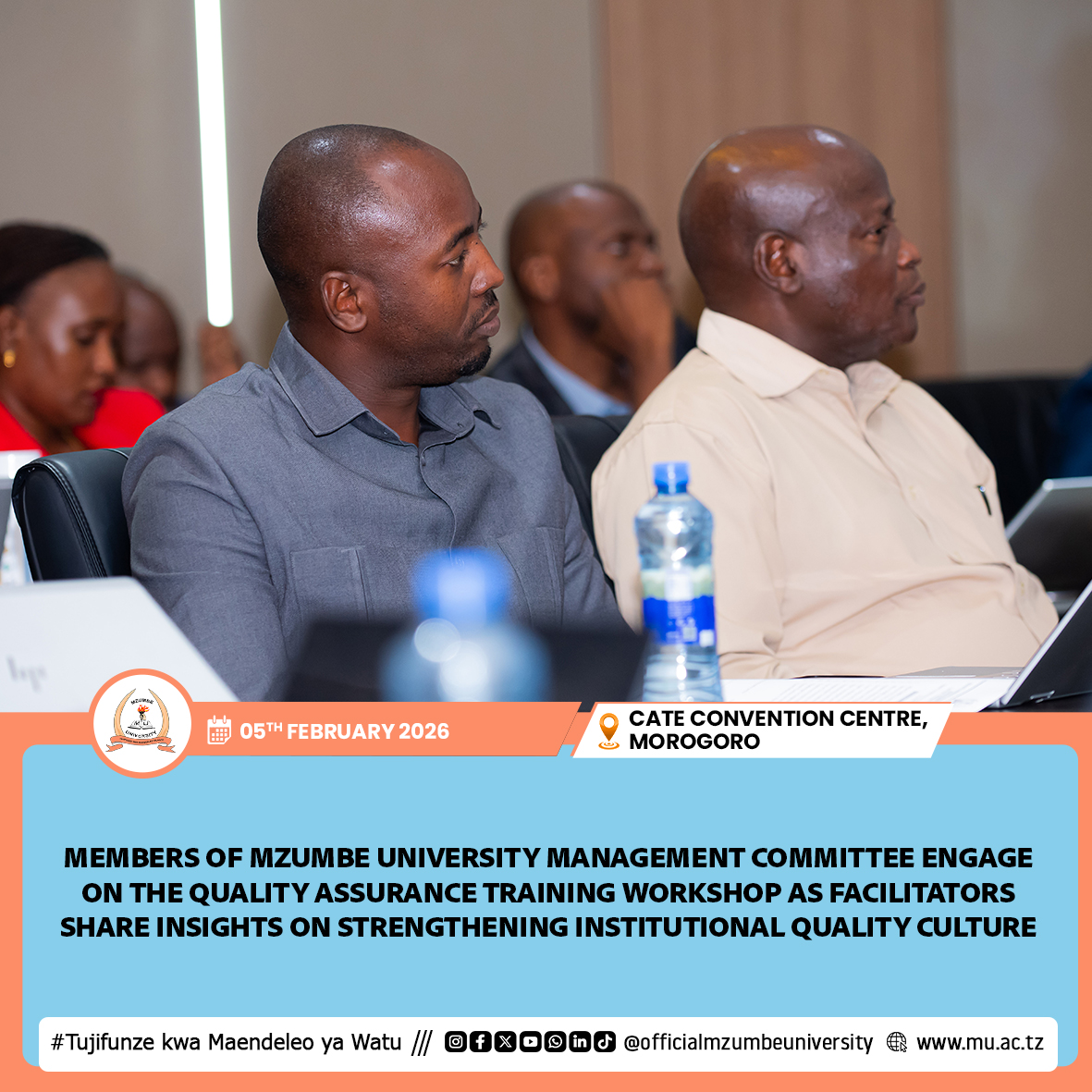
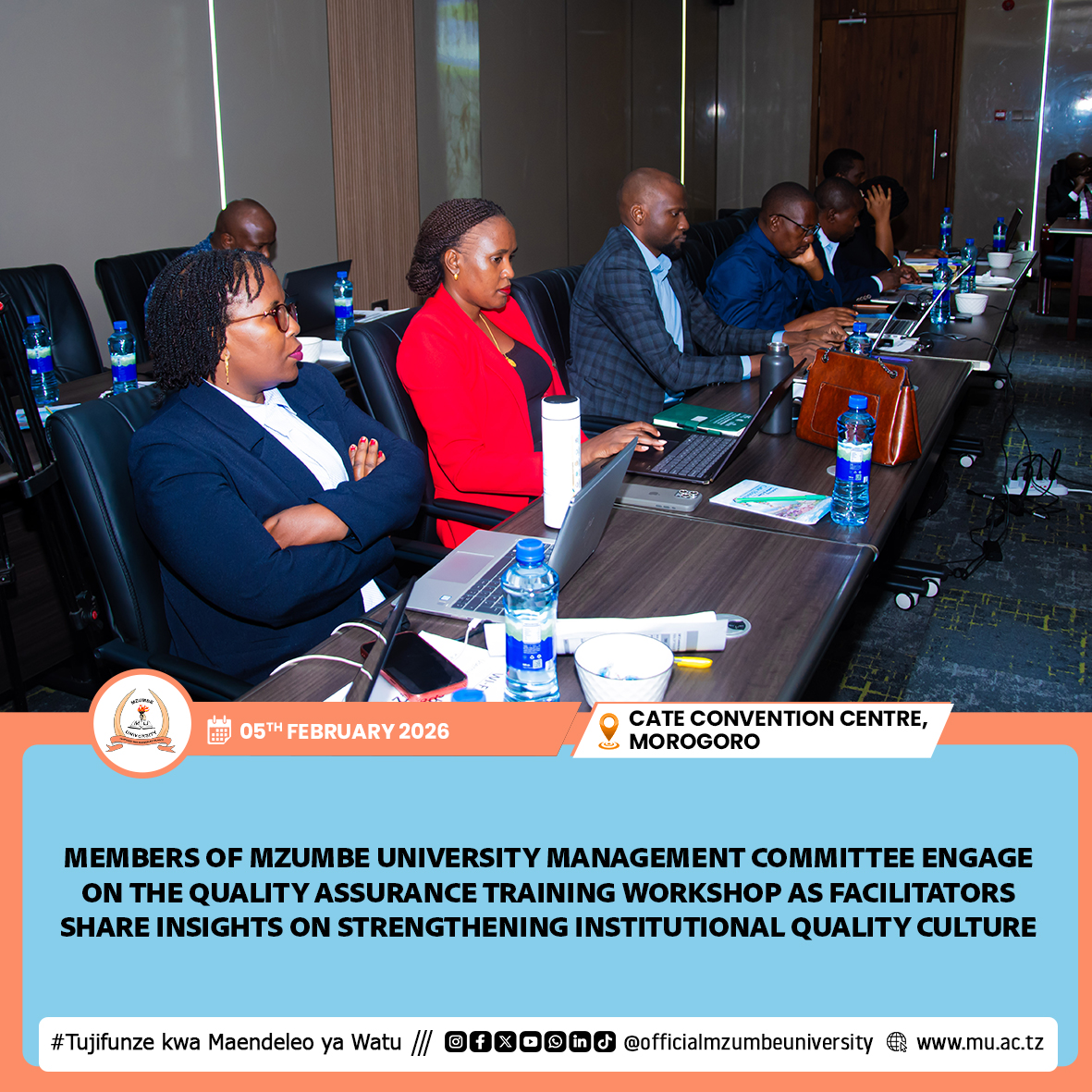
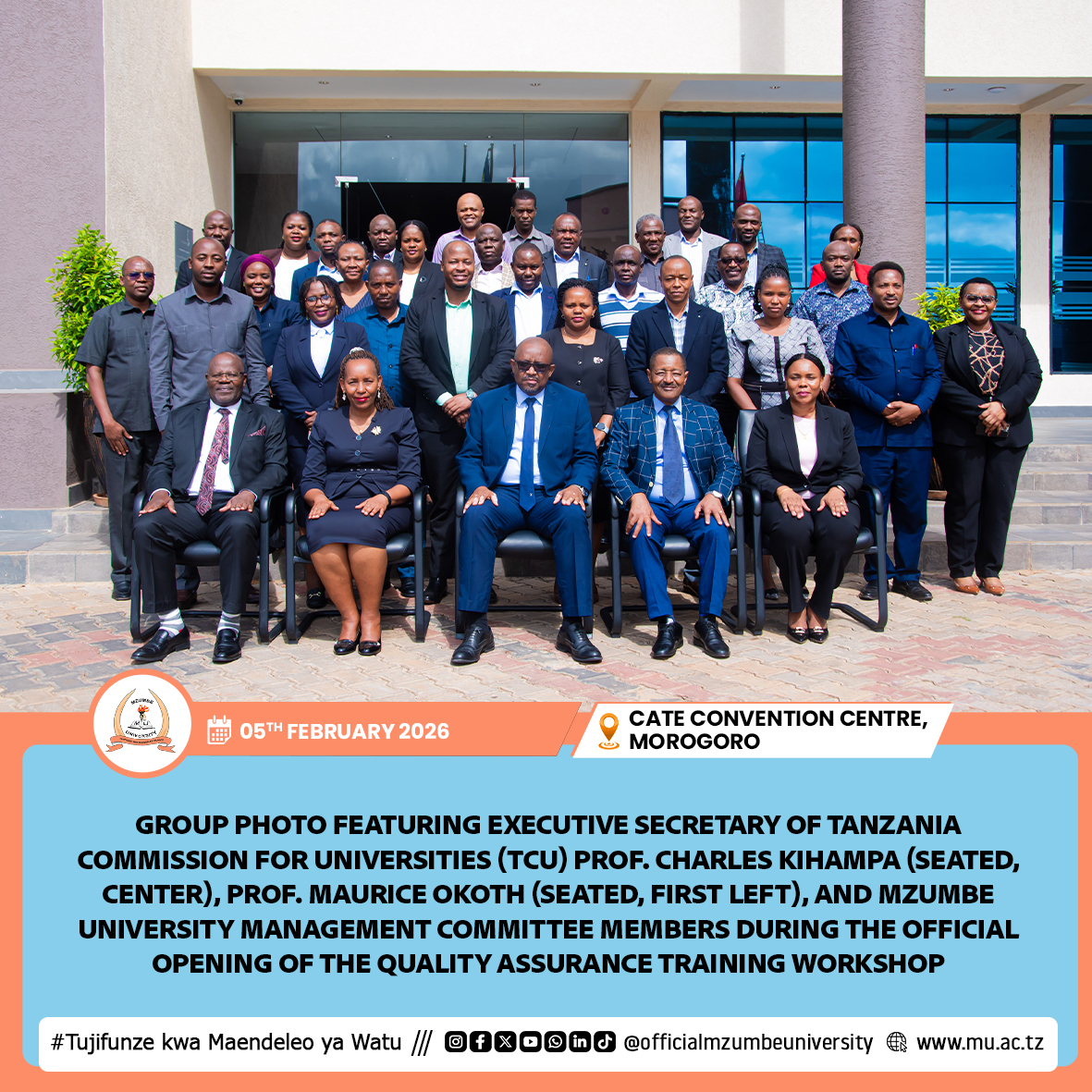
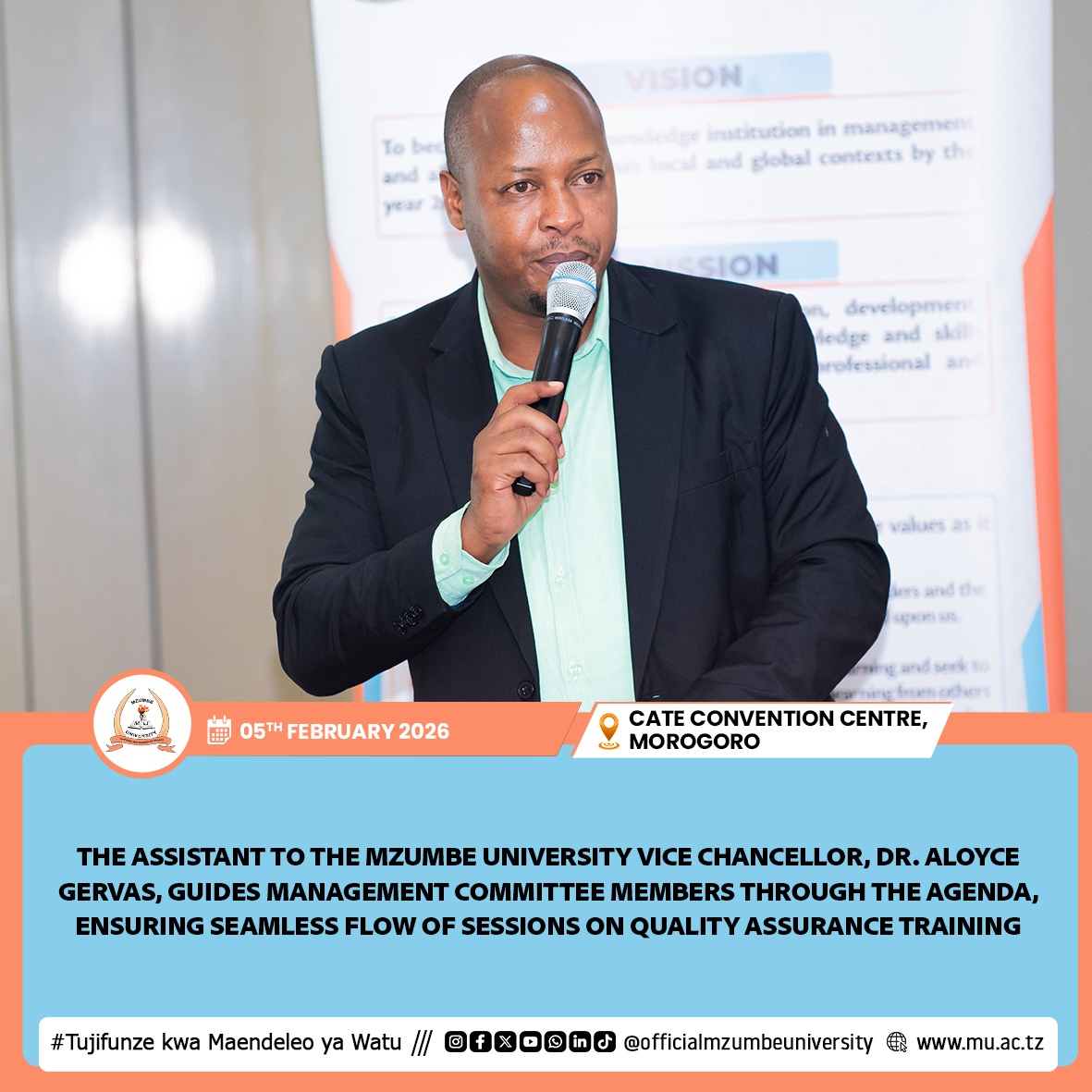
Mzumbe University has taken a decisive step toward strengthening academic governance and institutional performance as members of its Management Committee participated in a Quality Assurance Training Workshop officiated by the Executive Secretary of the Tanzania Commission for Universities (TCU), Prof. Charles Kihampa, held on 05 February 2026 at the CATE Convention Centre in Morogoro, aimed at enhancing leadership capacity in quality assurance systems and best practices. Prof. Kihampa emphasized that quality assurance must be embedded in daily university operations to ensure fairness, consistency, and accountability in academic and administrative decision-making. He encouraged leaders to apply quality principles objectively to maintain institutional credibility. In her remarks, the Deputy Vice Chancellor for Academic, Research and Consultancy, Prof. Hawa Tundui, emphasized that quality assurance must translate into improved teaching, learning, and graduate outcomes. She urged participants to engage practically in the training and ensure that quality principles are embedded in everyday operations, especially in blended learning delivery. On his part, the Deputy Vice Chancellor for Planning, Finance and Administration, Prof. Allen Mushi, highlighted that effective quality assurance systems are fundamental to the successful implementation of the University’s Corporate Strategic Plan, calling on management leaders to take ownership of standards that safeguard academic excellence, operational efficiency, and prudent resource management. During facilitation sessions, Prof. Maurice Okoth provided an in-depth exploration of quality assurance in higher education, highlighting the complexity of defining quality and the importance of legal frameworks, institutional systems, and stakeholder expectations. On the other hand, Prof. Kihampa led a comprehensive discussion on university governance structures and national quality assurance frameworks, stressing that quality in higher learning institutions is measurable and must align with predetermined minimum standards. The training served as a strategic forum for aligning leadership perspectives on quality assurance, reinforcing a shared responsibility among Management Committee members to uphold standards that safeguard academic integrity and institutional effectiveness.